
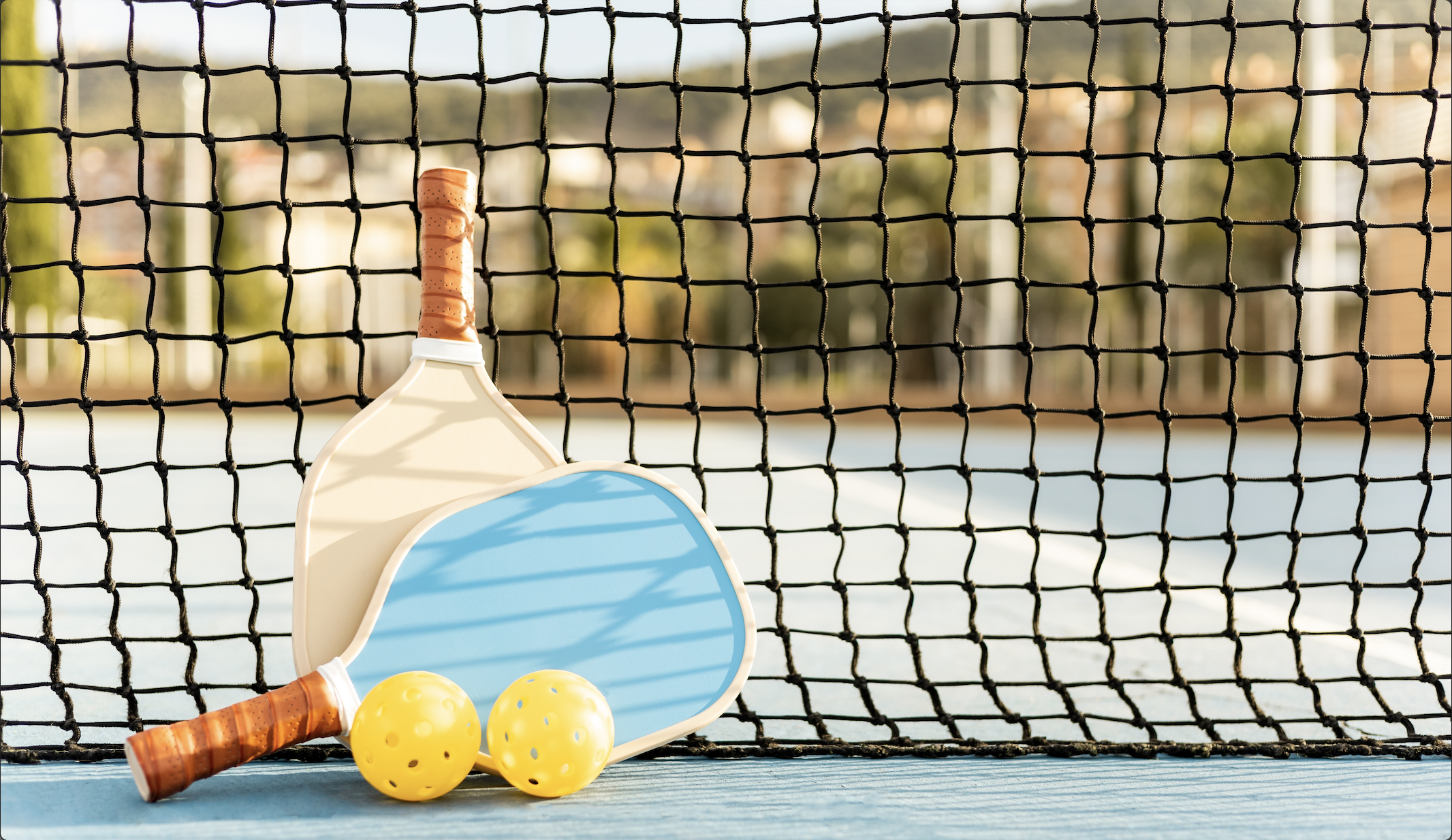

Pickleball is officially Australia’s fastest-growing sport, with data showing more than 90,000 Australians now taking to the court each year, ahead of sports like rugby and baseball. Its boom comes down to accessibility, its social nature and genuine intergenerational appeal: teenagers, parents and grandparents can all play together on the same court.
It’ easy to see why. Pickleball is simple to learn and low impact, making it an enjoyable way to meet recommended physical activity guidelines. Beyond building strength and endurance, a 2023 systematic review of pickleball research found that regular play is linked to greater wellbeing, life satisfaction and happiness, along with meaningful reductions in stress and depression, particularly among older adults (Cerezuela et al., 2023).
Unlike tennis, where repeated overhead serving places significant strain on the shoulder, pickleball is played with an underhand serve, so it tends to be much gentler on the joint (Hanks & Myers, 2025). The main physical demands instead sit through the hips and legs, with all the quick lunges and direction changes the game involves, which makes a bit of targeted strength and footwork training well worth the effort.
What the research tells us
Myers and Hanks (2024) looked at recreational pickleball players to understand what helps people move with the most confidence and control on the court, especially during lunges and quick changes of direction. Like most active sports, occasional slips or stumbles can happen, often during fast lunges or stepping backward, but the encouraging news is that this is very manageable with the right preparation.
- Speed and control come from the hips. Stronger hip abductors (the muscles on the side of your hip) were linked to faster, more controlled change-of-direction performance, helping players move through lunges and quick steps with more stability.
- Practice pays off. Players who moved more quickly and confidently through pickleball-specific footwork tended to feel steadier on court overall.
- It’s never too late to build this. Strength and movement quality can be improved at any age with the right training, which is good news for players picking up the sport later in life and a simple way to play with more confidence.
Where to focus your training
A few simple additions to your routine can make a big difference to how confident and steady you feel on court.
- Hip strength
- Lower body power
- Footwork drills
- Balance training
Don’t forget to follow us on Instagram and Facebook, where we will share each of these exercises!!!
Pickleball is a fantastic way to stay active, social and engaged, at any age. A little focus on hip and leg strength, along with some footwork practice, can help you move with more confidence and get even more enjoyment out of your time on the court.
If you need help to build a program to improve your game, a physiotherapist can help you train smart and play your best. Pop in and have a chat with one of our physiotherapists. We’ll get to know your game, build a program that fits you, and help you feel your best out there, week after week.
References
Australian Sports Commission. (2024). AusPlay participation data: Pickleball. Clearinghouse for Sport. https://www.ausport.gov.au/clearinghouse/research/ausplay/results
Cerezuela, J., Lirola, M., & Cangas, A. (2023). Pickleball and mental health in adults: A systematic review. Frontiers in Psychology, 14, 1137047. https://doi.org/10.3389/fpsyg.2023.1137047
Hanks, J., & Myers, B. (2025). Risk of upper extremity injury in recreational pickleball players. Journal of Functional Morphology and Kinesiology, 10(3), 247. https://doi.org/10.3390/jfmk10030247
Myers, B., & Hanks, J. (2024). Hip strength, change of direction, and falls in recreational pickleball players. International Journal of Sports Physical Therapy, 19(9), 1116–1125. https://doi.org/10.26603/001c.122490